March 23, 2026 12:00 pm
Date: Monday, March 23
Time: 12:30 – 1:30 pm (Lunch at Noon)
Location: Carl A. Fields Center, 104 Multi-Purpose Room
Speakers: Prof. Mark Zondlo & Asst. Prof. Nikhil Bugalia
Moderated by: Denise L. Mauzerall, William S. Tod Professor of Civil and Environmental Engineering and Public and International Affairs, Department of Civil and Environmental Engineering and the Princeton School of Public and International Affairs
Register Here
This seminar will explore the use of vehicle-mounted sensors to study human activity and air pollution at fine scales in U.S. and Indian cities. Professor Mark Zondlo will discuss the Princeton Atmospheric Chemistry Experiment (PACE) Mobile Laboratory, developed in his lab at Princeton. Assistant Professor Nikhil Bugalia, IIT Madras, will present the Mobile Urban Metabolism Multi-Attribute Sensing Platform (MUMMAS), a joint project between IIT Madras and Princeton University, led by PI Bugalia (IIT Madras, Lead PI) and Professor Anu Ramaswami (Princeton, Lead PI), with Professor Mark Zondlo (Co-PI), supported by joint funding from the U.S. NSF and India’s MeitY.
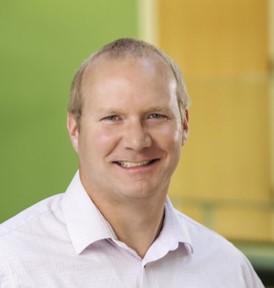
Mark Zondlo, Professor of Civil and Environmental Engineering, Princeton University
More about the talk – Greenhouse gas and air pollutant emissions in Chennai: A mobile laboratory equipped with high-performance sensors measuring greenhouse gases and air pollutants was deployed for three weeks in Chennai, India. Emissions from landfills and vehicles (compressed natural gas and liquid propane gas) were quantified, along with urban-rural gradients of pollutants across the region and temporal differences in concentrations such as holiday/weekends versus weekdays. In particular, emissions from a large landfill were compared to satellite measurements and solid waste emission factors for India. Our results suggest that existing inputs that produce solid waste emission factors, and associated methane emissions, for India require significant revisions.
More about Professor Mark Zondlo: Professor Zondlo’s research activities focus on the sources, sinks, and distributions of trace gases important for understanding air quality, the carbon and nitrogen cycles, and climate change. Professor Zondlo’s group develops and deploys new optical-based sensors to make innovative field measurements as part of large, multi-disciplinary field studies. They aim to bridge spatiotemporal scales from in-situ to remote sensing measurements to achieve a more complete understanding of the atmosphere and anthropogenic activities on the environment.
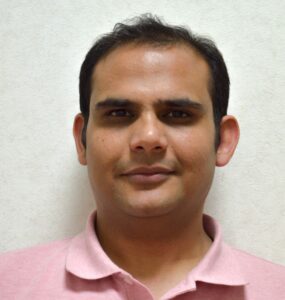
Nikhil Bugalia, Assistant Professor of Civil Engineering, IIT Madras, India
More about the talk – With advances in sensors, computer vision, and machine learning, we posit that vehicle-mounted cameras (optical and LiDAR), along with novel environmental and pollution sensors, can simultaneously quantify multiple attributes of urban metabolism to inform low-carbon, clean air, and resource circularity goals at fine spatial and temporal scales for cities. Hence, working collaboratively with Princeton University, USA, IIT Madras has developed a Mobile Urban Metabolism Multi-Attributes Sensing (MUMMAS) platform. Dr. Nikhil’s talk will focus on discussing the current progress, and interesting data analysis challenges, particularly in the developing countries context as the research team advance the MUMMAS applications.
More about Assistant Professor Nikhil Bugalia: Assistant Professor Bugalia’s research focuses on finding solutions to challenges related to Occupational Health and Safety and Sustainability in the Construction Industry. His research group works at the intersection of applying technical tools such as Text-Mining, Computer Vision (CV), and Virtual Reality (VR), and System-thinking-based qualitative and quantitative methodologies, such as system-dynamics modeling and case studies, to identify risks and develop and implement solutions for the construction sector. He is also serving as the advisor to Global Safety Evidence Center to Llyod’s Research Foundation and is also a member of the CIB working groups on Safety, Health, and Wellbeing in Construction (W099) and People in Construction (W123). He has extensive experience working on Skill Development, Capacity Building, and Training projects at the organizational and policy levels in association with the Asian Development Bank Institute, Tokyo, the Bill and Melinda Gates Foundation, and East Japan Railway Company. He also holds the secretary position to the special interest group on High-Speed Rail: Policy, Investments, and Impacts for the World Conference on Transport Research Society. He holds a PhD in Civil Engineering from the University of Tokyo and graduated in Civil Engineering from the Indian Institute of Technology, Kanpur, in 2013.
Scan to register

Co-hosted by: